
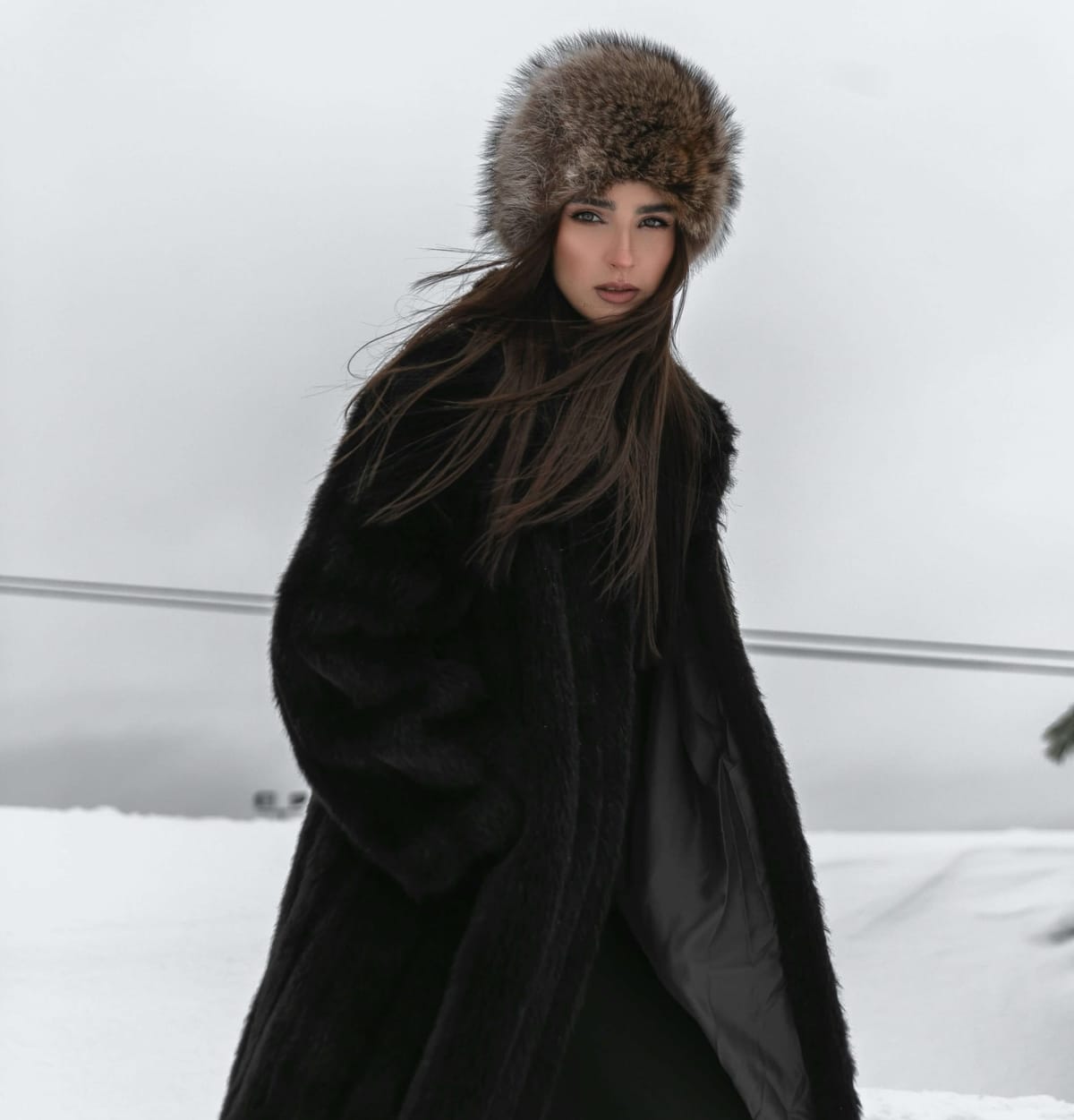
There is a persistent misconception that must be addressed before anything else: that elegance is fragile, passive, impractical, and perhaps most absurdly, uncomfortable.
If I am taking the time to write a guide on how to look elegant in active winter gear, it is because I have lived with this question for years. I have experimented, invested, failed, adjusted, and learned through repetition. What once felt like a contradiction now feels resolved. Those years of trial and error are finally paying off.
Each winter, I notice the same collective reflex. As soon as the temperature drops, beauty and femininity are set aside. Practicality becomes an excuse for neglect, and intention is treated as optional. Somewhere along the way, we began associating functional winter clothing with sloppiness, as though comfort and elegance could not coexist. I have never accepted this logic. I believe no season and no weather condition justifies carelessness toward one’s appearance.
I deeply resonate with some of the values of an earlier era, when caring for one’s self-image was understood not as vanity, but as self-respect. Beyond respect, there is also the undeniable impact appearance has on our inner world and mental health. It is striking how morale often declines during winter, and while shorter days and limited sunlight are frequently blamed, one must wonder whether the neglect that creeps into our style during these months also plays a role.
I have chosen not to abandon my beauty or my femininity (which is to say, I have chosen not to abandon myself) simply because of a season. I choose self-respect over sloppiness. If that perspective resonates with you, then this guide is for you.
That said, elegance in winter does require intention and discipline. Femininity, despite often being perceived as light, fragile, or passive, actually demands consistent care and attention. And yet, I firmly believe that every moment you invest in her, whether daily or weekly, is returned tenfold through beauty, confidence, joy, pleasure, creativity, and love.
This article focuses primarily on remaining elegant during active winter days, including city walks, running errands, and outdoor activities such as snowshoeing or walks in nature. Many of these principles, however, extend far beyond activewear. They are equally applicable to winter dressing as a whole, for anyone who wishes to remain intentional, composed, and elegant, regardless of the temperature.
I. The Power of a Structured Winter Coat
Let us begin with the most decisive element of an elegant, active winter outfit: the coat.
A coat is not an accessory, it is the frame. It is the first thing seen, the last thing removed, and the piece that carries the body through cold, wind, movement, and distance. In winter, a coat does not simply complete an outfit, it defines it.
For a long time, I struggled to understand what people meant when they spoke about the "cut of a garment". It sounded abstract, almost theoretical. And yet, when it comes to coats, cut is everything. It determines how the garment sits on the shoulders, how it holds the torso, how it moves when you walk, and how it withstands years of wear. A coat with a weak cut collapses quickly. A coat with a strong cut holds its presence.
The cut of a garment refers to its internal structure: the placement of seams, the shaping of panels, and the way the fabric is engineered to follow the body (or, you may have heard of the grainline). The silhouette is what we perceive from the outside. It is the visible result of that internal structure. A beautiful silhouette can be imitated. A strong cut, on the other hand, cannot. One is an illusion; the other is the result of how well the garment was constructed.
This is why I consistently return to brands that understand structure. I have found that Rudsak (not sponsored), for instance, does this particularly well in their winter coats. The princess seams are deliberate, not decorative. The zippers are placed with intention. The belts are not an afterthought, but an integral part of the design, creating a subtle corset effect that restores line and posture even under layers. I have always favored belted coats for this reason. They counterbalance the visual weight of winter clothing and remind the body to stand taller.
A well-cut coat feels different the moment you put it on; it does not pull or collapse, it does not fight the body, it follows the natural lines of the shoulders, waist, and hips, and moves with the body rather than against it. Much like a well-designed building, its stability is felt rather than seen.
What I also appreciate about this brand is the woman it is designed for. She is discerning, she values durability as much as appearance, she may be building her own wealth and shaping her own life, or she may be married to someone who understands the value of quality craftsmanship. In either case, the values remain unchanged. These coats are designed to endure temperatures as low as minus twenty-five degrees Celsius while remaining physically light, without unnecessary bulk. They are made for women who move through winter rather than retreat from it.
II. Dressing for Movement, Not for Bulk
Something worth remembering about elegant winter dressing is this: more layers do not automatically mean more warmth.
The instinct to pile on clothing is understandable, but it often works against both comfort and silhouette. Thin, intentional layers preserve warmth far more effectively than excessive bulk, which can restrict movement and dull the line of the body. Trusting craftsmanship removes the need to compensate with volume. A well-made coat is designed to do most of the work, keeping you warm while maintaining structure and proportion.
In many cases, sizing up simply to accommodate thicker layers leads to feeling overheated, slightly damp, and paradoxically colder once you step outside. Visually, the effect can be equally unforgiving, especially on petite frames, as the garment begins to overwhelm the body instead of supporting it. I personally aim for two layers underneath a coat, occasionally three at most. When shopping for outerwear, I always wear those layers while trying on jackets, using them as my reference rather than imagining how the coat might fit later.
Down jackets in particular perform best when worn closer to the body, as heat retention depends on proximity rather than excess space. For that reason, I usually recommend choosing the size closest to your usual one, unless the activity requires significant, aggressive movement, such as skiing. Elegance in winter is rarely about adding more. It is about choosing better.
III. Quiet Luxury in Activewear
Quiet luxury has become a familiar expression over the past few years, and it is an approach to dressing I deeply resonate with. Using Rudsak once again as an example, their refinement is immediately felt, without ever demanding attention.
Their logo is often integrated so discreetly into the design that it almost disappears, rendered in monochrome tones with a subtle engraved relief that only reveals itself up close. I find this detail incredibly sophisticated. It allows the garment to speak through its construction rather than through branding.
What I appreciate just as much are the details you only notice once you start moving through the day in it. The ones that make life easier without ever announcing themselves.
The zippers fall exactly where the body needs them to, opening and closing without resistance. There is a reassuring weight to them, and on some Rudsak coats, the zippers are framed in faux leather, which gives structure without stiffness. Double-ended zippers allow the coat to move with you, whether you’re walking quickly, sitting, or climbing stairs.
Certain elements shift effortlessly depending on context. Faux fur detaches when you want something cleaner, more urban. Hoods disappear when they are no longer needed. Wind is blocked where it matters most, hidden inside the sleeves, warming the body without adding bulk or distorting the line.
Even the smallest components feel intentional. Snaps close effortlessly. Buttons feel solid in the hand. Nothing feels flimsy or decorative for the sake of it. Everything has a purpose, and that purpose is to support movement, comfort, and presence.
To me, this is what a luxury-feeling garment truly is, especially in harsher climates. A piece that understands the body, respects movement, and offers protection without sacrificing elegance. Function and beauty are not opposites here, they are designed to coexist.
IV. Accessories That Preserve Elegance
Now that we have covered the most important element of elegant winter dressing, the coat, it is time to turn our attention to the accessories. These pieces may seem secondary, but they are essential in completing an active winter look that feels elegant, comfortable, and functional.
Neck Warmers
A quick search online for neck warmers will usually lead to the same familiar results: generic fleece tubes many of us wore at least once in childhood.
For me, fleece carries a very specific emotional memory. Heavy, unattractive winter boots. Dampness. Smells. Neglect. It reminds me of long Canadian winters and mandatory school outdoor time, when being warm mattered, but how it felt to wear the clothes did not.
At this stage of my life, I choose not to bring those associations forward. This chapter is about refinement, femininity, lightness, beauty, elegance, and perhaps most importantly, dignity. Because of that, I naturally gravitate toward materials that feel more elevated than fleece. Merino wool, fine knits, or even a knit neck warmer lined with faux fur offer just as much warmth, while preserving a sense of intention and grace.
I particularly love neck warmers for outdoor activities. They wrap the neck and jaw beautifully and offer the option of covering part of the face when wind or snow becomes intense. Protective, yes, but still elegant.
Hats
When it comes to hats, I prefer something sleek and close to the head. Whether it has a pompom or not is entirely personal, but a clean shape with a soft lining inside makes a noticeable difference, especially when it comes to keeping hair looking polished.
I tend to choose darker colors for accessories worn close to the face. Between makeup, skin care, lip balms, and humidity, darker shades age more gracefully and require less maintenance to stay chic. That said, if you have lighter contrast features, such as blond hair, fair skin, and light eyes, a lighter color may be more harmonious overall. It simply asks for a little more care over time.
Gloves
As for gloves, my rule is simple. Leather, always, with a lining.
Whether I am running errands or spending time outdoors, leather gloves feel timeless, feminine, and quietly powerful. They elevate even the most practical outfit and feel appropriate at any age. For more athletic winter activities, a sleek and structured ski glove makes sense, but for everyday wear, nothing compares to a well-made leather pair.
Glasses
Finally, glasses. I often opt for sunglasses, not only to protect my eyes from the sun, but also from wind and glare. And on particularly blustery days, if you do not wear prescription glasses, even a stylish pair of blue-light glasses can serve as an unexpected yet practical barrier.
Elegant winter dressing is rarely about excess. It is about choosing materials, shapes, and details that work both the body and the weather, while allowing beauty to remain present, even in the cold.
V. Boots, Proportions, and the Feminine Line
When it comes to boots, proportion is everything.
Very high winter boots with thick soles and heavy materials often shorten the leg visually, making it appear bulkier than it truly is. Mid-calf styles or boots that sit just above the ankle tend to be far more flattering, especially when paired thoughtfully with the rest of the outfit. It is always worth considering the relationship between your boots and the length of your coat. A simple rule of proportion applies here: dividing the body into thirds creates a more harmonious silhouette than cutting it in half.
I do love high boots when they are sleek and closely follow the shape of the calf. When they truly caress the leg, they can look incredibly elegant. However, thicker winter boots designed for active use tend to add visual weight, which can disrupt the line of the body if not balanced properly.
Fit is equally important. Boots should feel secure without being oversized, as excess volume can alter the way you walk and make the movement feel awkward. At the same time, they should not be overly tight. Comfort and circulation matter. There is also no need to compensate with excessively thick socks. Doing so often leads to dampness, which ultimately makes you feel colder. A high-quality boot should provide most of the warmth on its own, paired simply with regular socks.
In terms of styling, these boots generally look best with slim-fit pants, leggings, or tights, unless they are being worn under ski pants. On that note, I especially admire the beautifully cut, slightly bootcut ski pants from Rudsak. Their shape feels intentional, structured, and refined, maintaining a sense of elegance regardless of activity. The continuity of line they create allows even functional winter dressing to feel considered and elevated.
VI. Caring for Your Winter Wardrobe as a Form of Respect
Clothing, especially pieces designed to protect us through harsh seasons, deserves a certain level of intention. To handle garments carelessly is often a reflection of how hurried and disconnected we feel within ourselves.
Longevity, to me, is the ultimate expression of luxury. Not the constant accumulation of new items, but the joy of owning fewer pieces that are well made, thoughtfully chosen, and lovingly maintained. A coat that lasts for years carries a story. It becomes familiar, protective, and deeply personal.
Gentleness, care, and maintenance are not trivial gestures. They reflect inner values. Spot cleaning with attention, tending to areas that naturally require more care such as underarms, necklines, or the occasional food stain, and sending a coat to be properly cleaned before storing it away for spring or summer are all acts of respect. They signal that what we own matters, and that we do not consume thoughtlessly.
Ruthless consumption, on the other hand, often leads to both visual and emotional clutter. Closets overflow, yet nothing feels satisfying. When we slow down and choose care over neglect, we create space not only in our wardrobes, but in our minds as well.
Yes, investing in well-made winter pieces often requires a higher initial budget. But when treated with care, these garments repay us over time. Handled gently, cleaned properly, and worn with awareness, they can last for many years. And more than that, they retain their beauty. In the end, true elegance is not just about how something looks on the first wear, but how gracefully it ages alongside us.
VII. The Woman Who Moves Through Winter Beautifully
She walks through the city or nature in winter without shrinking herself.
Her steps are steady, her posture relaxed, her body warm without being burdened. Nothing pulls, nothing constricts. Her coat moves with her, her boots support her stride, her accessories feel intentional rather than improvised. She is dressed for the cold, but not erased by it.
In her body, there is ease. She feels protected, grounded, and at home within herself. She no longer sacrifices beauty for practicality, nor comfort for appearance. She has learned that the two were never meant to be separated. What she wears supports her movement, her mood, and her sense of self, instead of working against them.
There is no struggle here, no constant adjusting, no resentment toward the season. Winter becomes something she moves through with grace rather than something she survives.
Elegance is not about avoiding winter.
It is about refusing to disappear inside it.